Adopt a Rabbit
Help Us
Rabbit Health and Care
Local Events
Friends of Rabbits Newsletter Archive
Other Links
About Friends of Rabbits


By Suzanne S. Summers
Special to The Washington Post Friday, April 21, 2000; Page C06

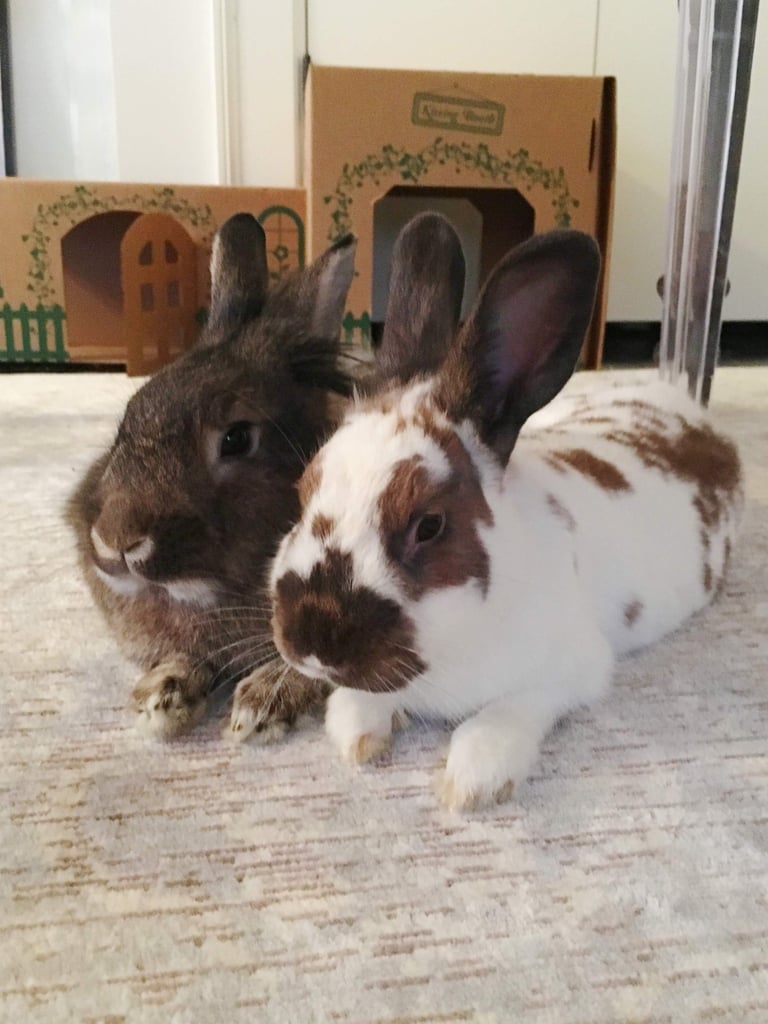
Sometimes the rabbit is like a dog; he follows me around the house and flops at my feet when I sit down. Sometimes he is like a cat, grooming me diligently with his tongue. Usually he is all rabbit: alternating between curiosity and caution, trying to teach rabbit sign language to his humans.

Before he happened upon this comfortable life, our rabbit companion followed a rocky path. A few months after Easter, he was found abandoned outdoors and was picked up by the animal shelter as a stray. He was one of a lucky few who were given a second chance at life.

Every year around Easter, hundreds of people will bring a bunny home to surprise their families. Often the initial delight will be followed by disillusionment: a frightened bunny nips, or one that is confined to its cage is pronounced boring. Many Easter bunnies wind up left at animal shelters or fending for themselves outside, vulnerable to traffic and predators. This tragedy can be averted if people do their research before bringing bunny home.

"No animal should be an impulse buy. We have rescued dozens of former Easter rabbits that were neglected or abandoned when the child's attention shifted from the animal to a new toy or activity. They have usually come to us in poor health," reports Vineeta Anand, manager of the Friends of Rabbits, a local group that rescues abandoned rabbits and educates the public about proper rabbit care.

Among many factors that should be considered before deciding to bring a rabbit home, commitment is essential. Rabbits typically live eight to 10 years, but some can live into their teens. Like any pet, rabbits deserve quality care throughout their lifespan.

Many people have discovered rabbits' potential to be fine house pets: They easily learn to use a litter box and can understand a few words, such as their names. They become attached to humans and can demonstrate affection. Carole Van Wie, a wildlife rehabilitator who has cared for hundreds of homeless rabbits at her sanctuary in Lusby, Md., believes these social creatures should live indoors with their humans: "To me, you do not have a pet, be it a cat, dog, or rabbit, if it is penned up outside. . . . You're better off without one."

There are several organizations that promote the rabbit as a house pet and discourage its use as livestock. The House Rabbit Society, a national organization with dozens of regional chapters, including one for the District, Maryland and Northern Virginia, published the 1985 book "House Rabbit Handbook: How to Live with an Urban Rabbit" (Drollery Press), by Marinell Harriman. It still is widely available in its third edition. Its Web site includes reading lists of rabbit literature, tips on litter training and rabbit-proofing the house. The society's quarterly House Rabbit Journal and the Baltimore-D.C. chapter's newsletter, the Clover Leaf, keep members up to date on rabbit issues.

Friends of Rabbits is a similar, Northern Virginia-based organization. Its rabbits travel to adoption shows at area stores, where volunteers answer questions, demonstrate grooming and will even clip your bunny's toenails for a small donation.

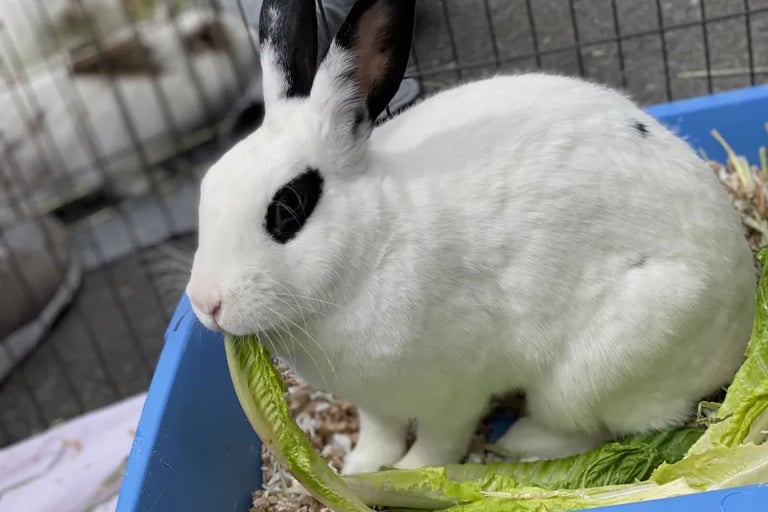
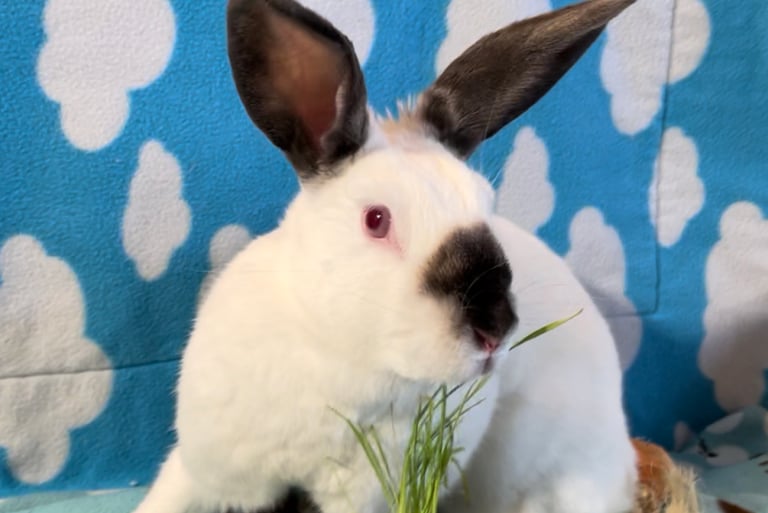
Both the House Rabbit Society and Friends of Rabbits feature adoptable rabbits on their Web sites; visitors can see pictures of the bunnies and read descriptions of their personalities. The Baltimore-D.C. House Rabbit Society features, among many, Argyle, who "can't get enough affection . . . loves to run circles around you with his toilet paper tube in his mouth," and Syrina, who "acts tough but melts if you kiss her head."

Rabbits adopted from these rescue groups have been neutered or spayed. This not only assures the rabbits won't reproduce, but also encourages neater litter box habits and reduces behavior and health problems. Adoption fees help alleviate some of the expense. Van Wie, who also has all of her adoptable rabbits neutered, notes this should be done by a veterinarian with rabbit experience: "Most people are shocked to discover that many vets do not know much more than how to spell 'rabbit.' " Rabbit groups will recommend local veterinarians.

As much as rescue groups want to find good homes for their bunnies, they discourage anyone from adopting one without fully researching the idea. "Rabbits are wonderful companion animals, but need a lot of care," Anand explains. "Veterinary bills alone can be several hundred dollars a year, not to mention the cost of adequate housing [indoors], food and litter."

They also warn against getting a bunny as a cuddly pet for a youngster. Rabbits are fragile creatures that can be harmed if mishandled, and they can bite. They are often scared of heights and may try to kick themselves free if lifted, risking injury to rabbit or child. Also, they are naturally cautious and take time to learn to trust people; children may not have the patience to bond. All this means that an adult must be ultimately responsible for the rabbit's care and well-being.

Rescue groups agree that rabbits and other animals should not be given as gifts; the recipients may not be willing or able to provide the long-term care the animal requires.

Holidays tend to be hectic, not conducive to a smooth transition with a new pet. Easter lasts only a day, but the rabbit should last for many years to come.

Resources

* The House Rabbit Society, Maryland-D.C.-Northern Virginia Chapter, Box 50311, Baltimore, Md. 21211; 301-570-9152, 410-889-4104; www.rabbit.org * Friends of Rabbits, Box 1112, Alexandria, Va. 22313; 703-548-6793; e-mail, friendsofrabbits@erols.com; www.friendsofrabbits.org

* Carole Van Wie's rabbit sanctuary, 1309 Tongue Cove, Lusby, Md. 20657; 410-326-6834; e-mail, cbvanwie@starpower.net

© 2000 The Washington Post Company


Home |Adopt | Help Us | Health | Events | Newsletters | Links | About Us

Please send donations to P.O. Box 1112, Alexandria, VA 22313
Friends of Rabbits is a 501(c)(3)(9) tax-exempt organization.
All donations are tax deductible.
Copyright © 2004 Friends of Rabbits. All Rights Reserved.

Top of Page